Chinese Herbal Medicine in Miami: Formulas Built Around Your Pattern
On patterns, classical formulas, and why two people with the same symptom rarely leave with the same prescription
By Christina M. Casado, L.Ac. | Treehouse Acupuncture & Wellness, Miami
Two people walk into our clinic with migraines. In Western medicine, they share a diagnosis. In Chinese medicine, they may not share much at all.
One person’s headaches might come from heat rising upward; the other’s from something closer to depletion. Same symptom, different story underneath — and that story is what Chinese herbal medicine is built to read. At Treehouse, every herbal formula starts there: with you, not with a label.
Same Symptom, Different Pattern
In Chinese medicine, we don’t simply name a disease. We identify a pattern — sometimes called a pattern of disharmony, or bian zheng — which describes how your body is functioning and where the imbalance is occurring. It’s one of the biggest differences between Chinese and Western medicine.
Those two migraines, for example, might each trace back to a different pattern: Liver Yang Rising, Blood Deficiency, Damp-Phlegm, Qi Stagnation, Kidney deficiency — or another pattern entirely. The symptom is the same. The pattern underneath it is different.
And that pattern decides everything that follows: which acupuncture points we choose, which herbal formula we write, what dietary advice we give, and how we plan your treatment.
What Is an Herbal Formula, Exactly?
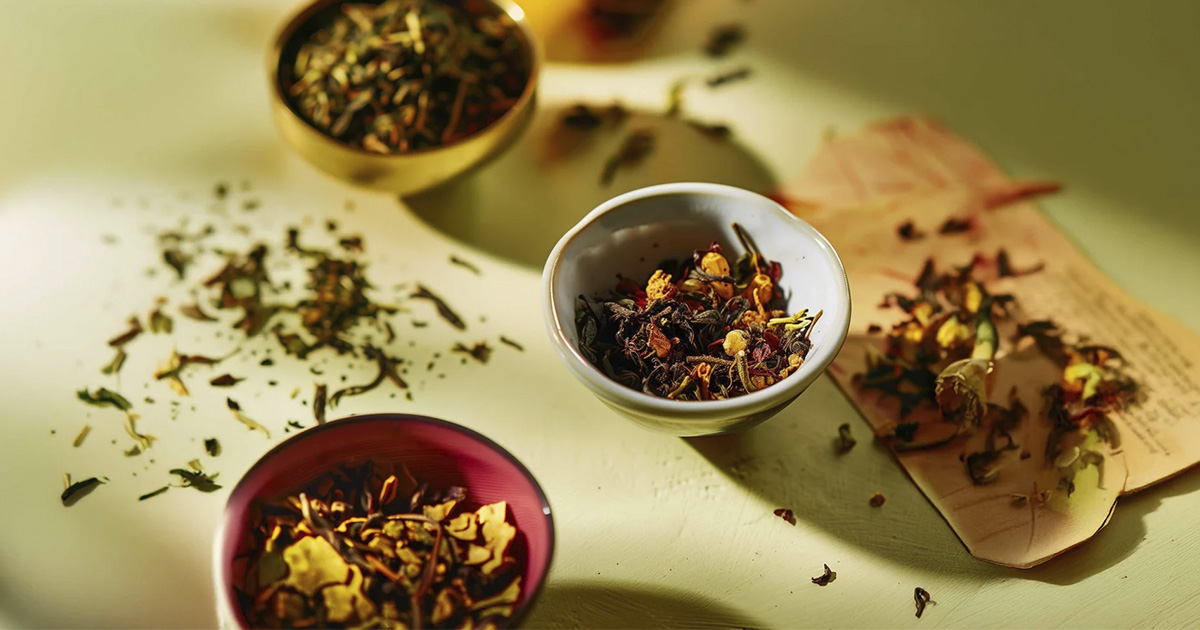
A Chinese herbal formula is a carefully balanced combination of medicinal substances — mostly plant-derived, occasionally animal or mineral — arranged according to a treatment strategy. Its effectiveness depends entirely on proper diagnosis. There’s an old adage we love: “the formula is derived from the strategy, and the strategy arises from the pattern.”
Today’s prescriptions draw on roughly 300 classical formulas, modified using around 500 single herbs. That’s what makes them so adaptable: a formula can be elegantly tuned to your particular needs, and adjusted again as your body changes.
A Tradition That Keeps Rewriting Itself
Chinese herbal medicine is old — but it has never stood still. The oldest known book on the subject, the Shennong Ben Cao (Shennong’s Materia Medica), is believed to date to the Han dynasty and classifies 365 species of roots, grasses, woods, minerals, and more.
Some of the earliest written formulas were found among the silk manuscripts of the Mawangdui tomb in Hunan, sealed in 168 BCE and rediscovered in the early 1970s. They’re wonderfully pragmatic: a disorder is listed, then its formula — like one for deep abscesses built around Astragalus and Peony, with modifications for severity and location. Even then, they included instructions for preparing decoctions, drafts, and pills.
At the end of the Eastern Han dynasty came the Shang Han Lun (Discussion of Cold Damage), often called the ancestor of all formularies: 112 herbal prescriptions, organized into six divisions known as the “six channels.” Centuries later, in the Tang dynasty, the physician Sun Si-Miao wrote Important Formulas Worth a Thousand Gold Pieces — and some of its formulas are still in use today.
Between the 14th and 19th centuries, something shifted: treatment became inseparable from diagnosis. Physicians began to require that the nature of a disease (hot or cold, excess or deficient) and its location be identified before choosing a formula. A large share of the formulas we use today come from this period. In the 20th century, Japan’s own herbal tradition, Kampo — with its parallel idea of sho, or pattern — became an important influence too.
Every formula has a history: it was developed at a certain time, for a specific purpose, and reinterpreted by physicians over hundreds of years. That’s the tradition behind the prescription you take home.
How Chinese Herbal Medicine Differs From Western Herbalism
Western, European, and Native herbal traditions often work with single herbs or simple combinations. Chinese herbal medicine is grounded in classical texts and works with formulas — multiple herbs balanced against each other, each one shaping how the others act. The goal isn’t just to address a symptom, but the pattern that produced it.
Herbs and Acupuncture, Working Together
At Treehouse, herbal medicine isn’t a separate add-on. It comes out of the same diagnosis as your acupuncture: tongue, pulse, and Hara, read together to identify your pattern. (Curious how that diagnosis works? Start with What Is Acupuncture?)
From there, we may pair Japanese-style acupuncture with a custom-written herbal prescription, plus simple nutritional guidance. It’s also part of how we support patients through fertility care, alongside acupuncture and nutrition.
Quick Answers
What does Chinese herbal medicine treat? Formulas are used for acute concerns, like the common cold or intestinal flu, as well as longer-term ones, like digestive, gynecological, and allergy concerns. Your prescription is written to address both the symptom and the pattern behind it.
Where do Chinese herbs come from? Most come from plants. Some formulas include animal or mineral ingredients, and formulas can be modified if you’re vegetarian or prefer to avoid animal-sourced herbs.
Should I stop my current medication if I take Chinese herbs? No — always talk to your primary care physician before changing any prescribed medication. It’s best to keep every one of your practitioners informed about everything you’re taking, herbal and otherwise.
What if a formula doesn’t feel right? Tell us. Formulas are prescribed according to your pattern and adjusted as you go, so if you notice anything unexpected, we’ll review it with you and modify the formula.
How long will I take an herbal formula? Typically anywhere from a few weeks to a few months, giving your body time to re-establish balance. Acute concerns tend to respond sooner than long-standing ones.
Why Treehouse
Doctor-performed, trained in the Kiiko Matsumoto lineage, and twice voted Best of Miami-Dade (2023 and 2025), our physicians bring classical herbal medicine into a plan that’s 100% personalized — never cookie-cutter. Guided by nature, grounded in science, designed to heal you.
If you’d like to explore what Chinese herbal medicine could look like for you, we’d love to meet you at our acupuncture clinic in Miami.
Book your first session at Treehouse →
Christina M. Casado, L.Ac. is the founder of Treehouse Acupuncture & Wellness, located at 2000 S. Dixie Highway, Suite 205B, Miami, FL 33133. Voted Best of Miami-Dade 2023 and 2025. Questions? Reach us at info@treehouseacupuncture.com or (305) 443-2220.
Last reviewed: October 2026