Japanese Acupuncture in Miami: What Makes It Different
On palpation, painless needles, and why Treehouse practices the Kiiko Matsumoto style
By Christina M. Casado, L.Ac. | Treehouse Acupuncture & Wellness, Miami
Most people picture the same thing when they hear “acupuncture” — thick needles, deep insertion, maybe some soreness after. That picture is usually Chinese-style acupuncture. It’s not what happens at Treehouse.
We practice Japanese-style acupuncture, specifically the Kiiko Matsumoto method — a lineage both Dr. Christina Casado and Veronica Cid have studied for years. It looks, and feels, like a different practice entirely.
Japanese vs. Chinese Acupuncture — What’s Actually Different
Both traditions come from the same root system, but they diverged over centuries into distinct clinical styles. Chinese-style acupuncture, the version most familiar in the West, generally uses thicker needles inserted more deeply, often held in place for twenty to thirty minutes.
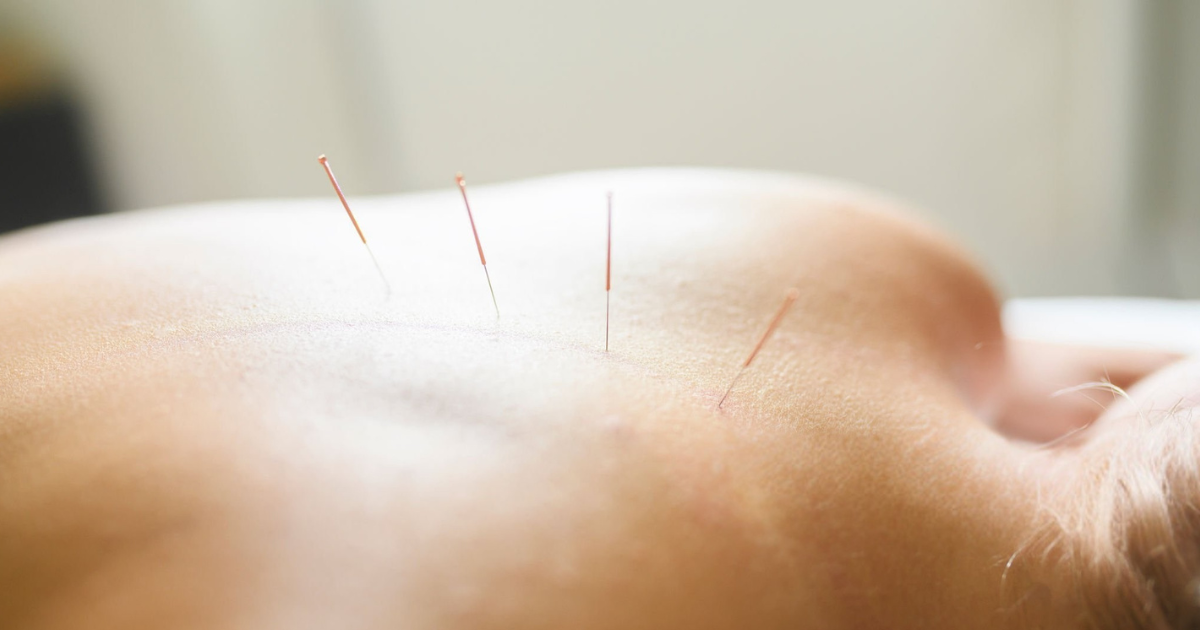
Japanese acupuncture takes a different path. It relies on some of the finest needles used in the field, inserted shallowly, often for just a moment before being adjusted or removed. The Edo Period tradition it grew from — practiced for centuries in Japan, historically by blind practitioners who developed an extraordinary sense of touch — prioritized sensitivity over force. That emphasis on touch is still the core of the style today.
Diagnosis Through Palpation, Not Just Questions
In Kiiko Matsumoto Style, treatment starts with touch. We use Hara diagnosis and pulse and abdominal palpation to feel directly what’s happening in your body — where there’s tension, where circulation is restricted, where something isn’t moving the way it should.
The advantage is immediate feedback. When we find the right reflex and the right point combination, the improvements occur in real-time, right there on the table — a release, a shift in the tissue, a difference in how the area feels under our hands. Treatments don’t require waiting a week to evaluate. We adjust in real time.
Why the Needles Barely Register
Kiiko Matsumoto is known for treating complex, stubborn cases using some of the smallest gauge needles in the profession — needling that’s shallow enough to be virtually painless for most patients. If needling isn’t right for you on a given day, there are non-invasive techniques within the style too, so treatment adapts to you rather than the other way around.
This is also where our other Japanese techniques fit in — moxibustion (Okyu), gentle heat therapy, and cupping all work alongside the needling, chosen based on what your body is asking for that day.
Quick Answers
Is Japanese acupuncture painful? Not typically. The needles are among the finest used in acupuncture, and insertion is shallow — most patients describe the sensation as minimal to none.
What’s the difference between Japanese and Chinese acupuncture? Primarily needle gauge, insertion depth, and diagnostic approach. Japanese style, especially Kiiko Matsumoto’s method, relies heavily on palpation and tends to use gentler, more precise technique.
What is Kiiko Matsumoto Style? A palpation-based system developed by Kiiko Matsumoto, integrating classical Chinese medicine theory with the clinical methods of several Japanese acupuncture masters. Both of our practitioners have trained extensively in this lineage.
Do you still use herbal medicine or cupping with this style? Yes — Japanese-style needling is one part of treatment. We combine it with Hara diagnosis, moxibustion, cupping, and herbal medicine as each case calls for it.
What Your First Session Looks Like
Expect us to spend real time with our hands before we ever pick up a needle — feeling your abdomen, your pulse, checking for tension patterns that tell us more than a verbal symptom list ever could. From there, treatment is built specifically around what we find, using the smallest effective technique. Many patients are surprised by how little they feel, and how much changes anyway.
Why Treehouse
Doctor-performed, trained for years in the Kiiko Matsumoto lineage, and twice voted Best of Miami-Dade (2023 and 2025) — this isn’t a technique we picked up in a weekend course. It’s the foundation our physicians built their practice on. Guided by nature, grounded in science, designed to heal you.
Curious what gentle, palpation-based acupuncture in Miami actually feels like?
Book your session at Treehouse →
Christina M. Casado, L.Ac. is the founder of Treehouse Acupuncture & Wellness, located at 2000 S. Dixie Highway, Suite 205B, Miami, FL 33133. Voted Best of Miami-Dade 2023 and 2025. Questions? Reach us at info@treehouseacupuncture.com or (305) 443-2220.