Why Acupuncture Has Outlasted Everything Else: A (Very) Brief History
From stone needles to the Yellow Emperor to Japanese-style care in Miami
By Christina M. Casado, L.Ac. | Treehouse Acupuncture & Wellness, Miami
A lot of our patients are surprised when we tell them how old acupuncture really is. “2,000 years?” Yes — more, actually — and still going strong.
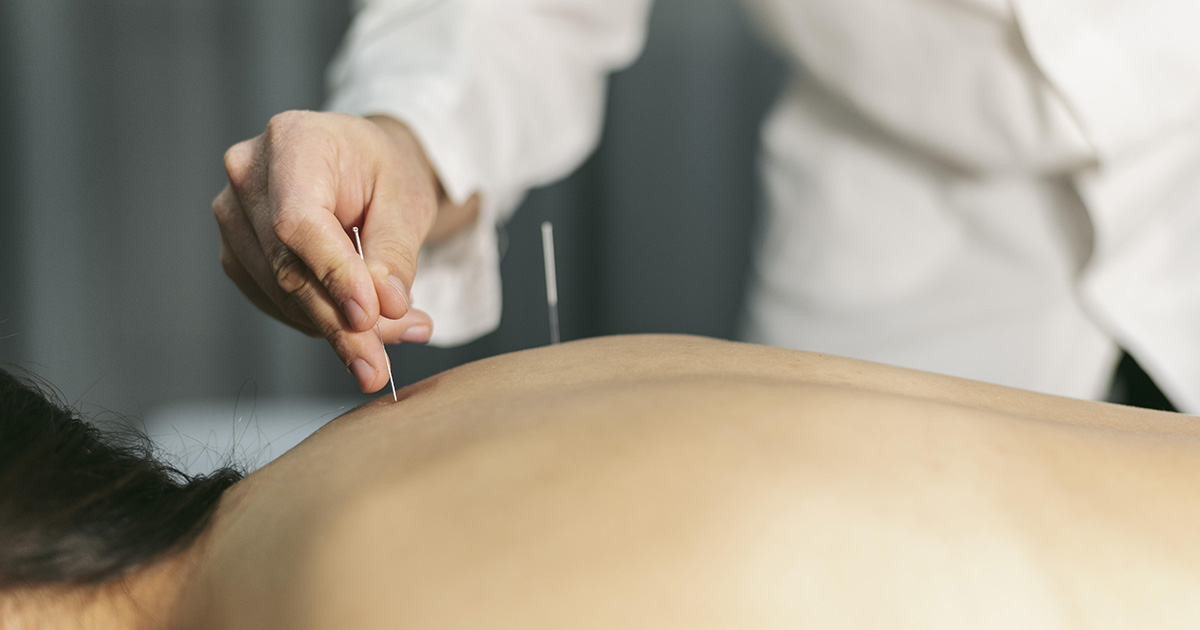
Acupuncture took shape in China more than 2,000 years ago, with roots reaching all the way back to the Stone Age. From there it traveled across Asia — including to Japan, where the gentle, touch-based style we practice at Treehouse was born. Few forms of medicine have been practiced, continuously, for that long. Here’s the very brief version of how it got here.
Before There Were Needles, There Were Stones
Long before anyone wrote a word about qi or meridians, there were stones. In the Old Stone Age — more than 10,000 years ago — people used sharpened stone tools to relieve pain. By the New Stone Age, those tools had been refined into stone needles, known in Chinese as bian.
Over the centuries, stone gave way to finer materials and eventually to metal. Each change made the tool thinner, more precise, and a little closer to the needles we use today. You could say acupuncture has always been a sticking treatment.
The Book That Started It All
The acupuncture we know today was born in a single text: the Huangdi Neijing, or Yellow Emperor’s Classic of Medicine. Written as a conversation between the legendary Emperor Huang Di and his physician, Qi Bo, it discussed needling techniques and identified over 160 acupuncture points.
Over time, new techniques were developed and more points were named, until acupuncture became the healing modality we turn to today. But the heart of it hasn’t moved: the body is one interconnected system, symptoms are messages rather than isolated problems, and health is a matter of balance.
How Acupuncture Found Its Way to Japan
Acupuncture didn’t stay in China. Around the 6th century, it traveled to Japan with a Chinese monk-physician named Chiso — and from there, it began to grow in its own direction.
Its most important chapter came during the Edo Period, with a blind acupuncturist named Sugiyama Waichi (1614–1694). Sugiyama developed the shinkan, a slender guide tube that lets a very fine needle slip in with barely a sensation, and he founded schools that taught acupuncture to other blind practitioners. He’s often called the father of Japanese acupuncture.
Generations of healers who worked by touch shaped a style built on sensitivity rather than force. That tradition is still in the room every time you lie down on our table: Japanese-style acupuncture is gentle, shallow, and guided by the hands.
What Hasn’t Changed in 2,000 Years
In any doctor’s office, your pulse rate is checked to see how your heart is doing. In Chinese medicine, the pulse tells us much more — its length, its depth, its quality. Add a look at your tongue, and your acupuncturist can begin to read where your energy is flowing freely and where it’s stuck. In Japanese-style acupuncture, we also palpate reflex points on the body. It seems so simple. It is not a practice for beginners.
Those same diagnostic arts — pulse, tongue, touch — are still how every session at Treehouse begins. (For the full picture of how we diagnose and what a first visit looks like, start with What Is Acupuncture?)
Today, our physicians practice in the Kiiko Matsumoto lineage — a palpation-based system that integrates classical Chinese medicine theory with the clinical methods of several Japanese acupuncture masters. Alongside needling, we use moxibustion (Okyu), cupping, and herbal medicine: tools with centuries of history behind them, chosen for what your body needs right now.
Quick Answers
How old is acupuncture? Acupuncture as we know it took shape in China more than 2,000 years ago, recorded in the Huangdi Neijing. Its roots — stone tools used to relieve pain — reach back to the Stone Age.
Where did acupuncture originate? In China. It later spread across Asia, including to Japan, where it developed its own gentle, touch-based style.
What is the Yellow Emperor’s Classic of Medicine? The Huangdi Neijing — a foundational text of Chinese medicine, written as a dialogue between Emperor Huang Di and his physician Qi Bo, describing needling techniques and acupuncture points.
How is Japanese acupuncture different from the Chinese tradition? Mainly in needle gauge, insertion depth, and diagnosis. Japanese style tends to use finer needles, shallower insertion, and more palpation. More in our guide to Japanese acupuncture in Miami.
Why Treehouse
Two thousand years is a long time for any medicine to last — and we take that inheritance seriously. Doctor-performed, trained for years in the Kiiko Matsumoto lineage, and twice voted Best of Miami-Dade (2023 and 2025), we bring an ancient practice into a modern, personal plan built around you. Guided by nature, grounded in science, designed to heal you.
If you’d like to experience this 2,000-year-old practice for yourself, we’d love to welcome you to our acupuncture clinic in Miami.
Book your first session at Treehouse →
Christina M. Casado, L.Ac. is the founder of Treehouse Acupuncture & Wellness, located at 2000 S. Dixie Highway, Suite 205B, Miami, FL 33133. Voted Best of Miami-Dade 2023 and 2025. Questions? Reach us at info@treehouseacupuncture.com or (305) 443-2220.
Last reviewed: October 2026